
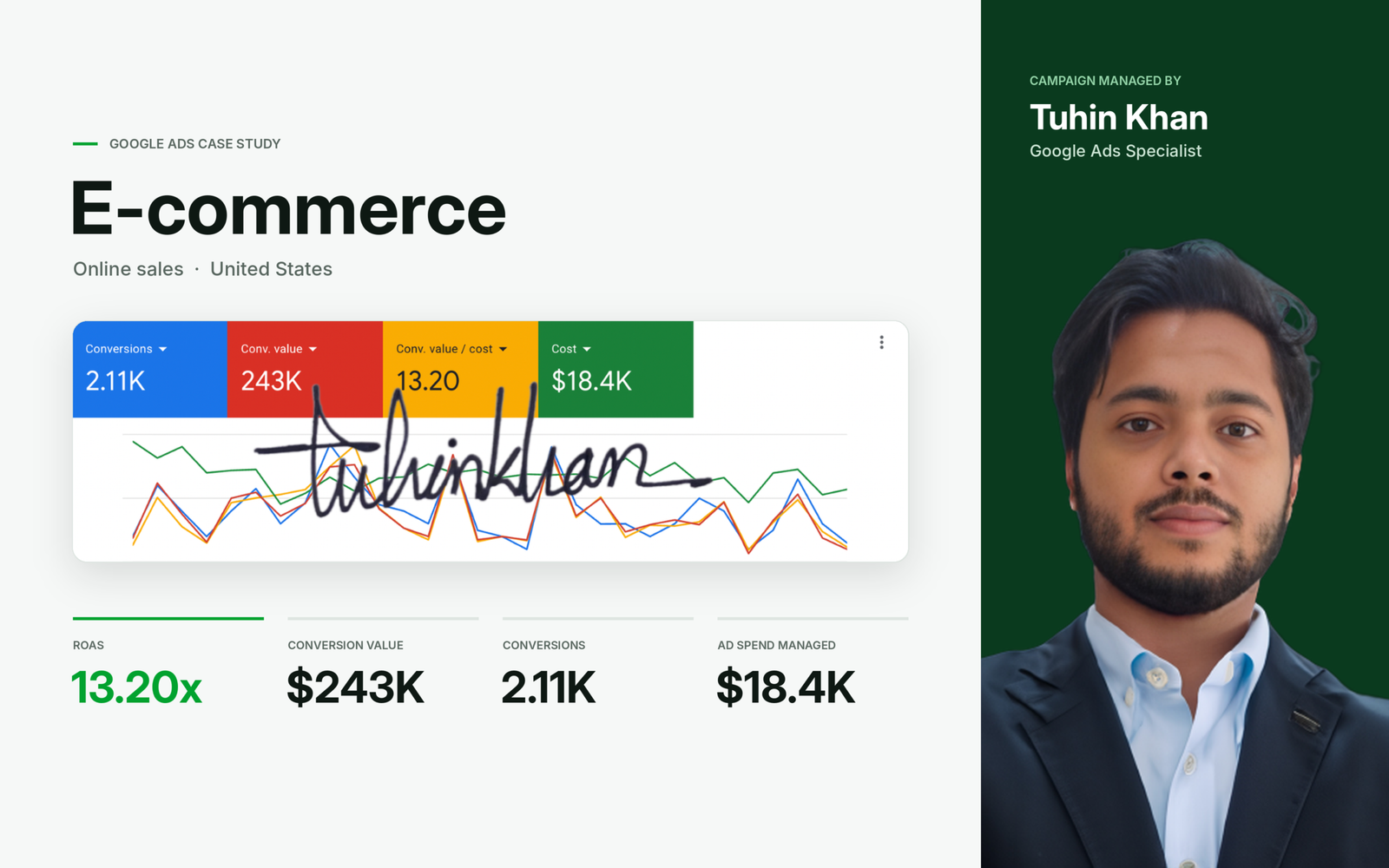


E-commerce Google Ads can be hugely profitable when every dollar is tracked back to real sales. Here is how a US cosmetics store turned $18.4K of ad spend into $243K in revenue at a 13.2x ROAS.
The Client
An online store selling cosmetic products to customers across the United States. They’d tried Google Ads before, but sales were patchy and nobody could say which products were actually making money.
The Challenge
- A thin product feed: Titles were short and generic, so products showed for the wrong searches or didn’t show at all.
- Paying for brand searches twice: A big share of “sales” came from people already searching for the store by name.
- Tight margins: With small ad budgets, wasted clicks hurt fast.
What I Did
Rebuilt the product feed first: Product titles were rewritten to match how people actually search: brand, product type, key feature, size or colour. I filled in missing attributes and added custom labels for margin and best-seller status.
Split products by what they earn: Hero products, steady sellers and low-margin items each got their own campaign and their own ROAS target. That stopped cheap products from eating the budget.
Kept brand and non-brand apart: Brand searches ran in a small, separate campaign. That gave me an honest picture of how many new customers the ads were finding.
Bid on value, not clicks: Purchase values were passed back to Google, and campaigns moved to target ROAS once they had enough sales data.
Cut wasted spend weekly: Search terms were checked every week. Terms like “free”, “DIY”, “used” and competitor-only searches were added as negatives.
E-commerce Google Ads Results
| Metric | Result |
|---|---|
| Ad spend | $18.4K |
| Conversion value (sales) | $243K |
| Conversions (orders) | 2,110 |
| ROAS | 13.20x |
| Average order value | about $115 |
| Cost per order | about $8.72 |
At under $9 to win an order worth about $115, every sale carried plenty of room for profit.
What the Numbers Show
A 13.20x ROAS means the store spent about 7.6 cents on ads for every dollar of sales. For most online shops, that leaves plenty of room for product costs, shipping and profit.
The average order came in at about $115, and each order cost about $8.72 in ad spend. That gap is what makes e-commerce Google Ads worth scaling. When a sale costs less than a tenth of its value, the question stops being “is this working?” and becomes “how much more can we spend?”
The biggest driver was bidding on value instead of clicks. Once real purchase values were flowing back into the account, I could use Target ROAS bidding to push budget toward the products and searches that brought in the most revenue, not just the most orders.
Just as important was honest reporting. Separating brand from non-brand searches meant the 13.2x figure reflects new customers finding the store, not just people who already knew its name.
Is This Approach Right for Your Online Store?
This setup suits online stores with a clear product feed, enough sales data for value-based bidding and margins that vary across products. Smaller stores can still use it. Start with your best-selling products, then expand once the numbers are proven.
Whatever your size, effective e-commerce Google Ads comes down to the same things: a clean feed, campaigns grouped by profit, honest brand reporting and bidding on real purchase values.
What Other Online Stores Can Learn
- Fix your product feed before you touch bids. It’s the targeting for Shopping ads.
- Group products by margin, not by category, and set a separate ROAS target for each group.
- Separate brand from non-brand, or your results will look better than they really are.
Want Results Like This for Your Store?
I’ll audit your Google Ads account and product feed for free and show you where the money is leaking. Book a free consultation.
Want to see how I work? Read about my Google Ads management services or browse more Google Ads case studies.